Author: Rob Mahan

  • Active Inactivity

    Active Inactivity

    A good friend of mine, Eddie Rhoades, once said to me, “Rob, there are too many things in the world that go ‘beep’.” In many of our lives today, amidst the incessant clamor of the modern world, we often forget to leave room for the quiet. I first learned about the idea of “active inactivity” in a small but powerful book, Zen and the Martial Arts by Joe Hyams.

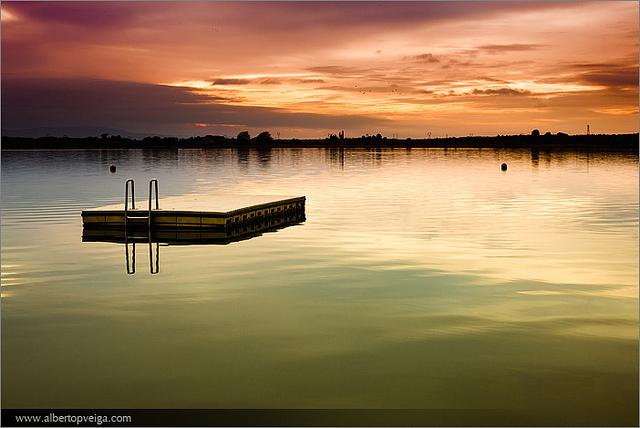
    Active inactivity isn’t as easy as it may seem at first blush. It isn’t just not doing something . . . it’s doing nothing on purpose. Nothing physical, like taking a walk or a nap. Nothing mental, like thinking about a problem at work or planning a vacation. Nothing. Well, nothing except breathing, which we normally don’t even think about. Try doing nothing but thinking about your breathing for fifteen minutes sometime tomorrow. In. Out. In. Out. In. Out . . . If you don’t make it the first time, don’t be hard on yourself. It really is harder than it sounds. Let it go and try again the next day, and the next.

    Claude Debussy said, “Music is the silence between the notes.”

    When I’m being well-disciplined, I try to do nothing on purpose for fifteen minutes before starting a writing session. If I succeed, my mind seems to be clearer, calmer, and it’s easier to focus on the day’s work. Active inactivity can tame wild mind-monkeys. And it’s a gift you can give to yourself, with a little practice.

    In An Irish Miracle, young Dillon Connolly discovers perfect stillness for the first time in the Irish countryside. Raised on a bustling farm in northwestern Ohio, it’s a new and wonderful experience, one that evokes surprisingly powerful emotions.

  • The Renaissance of Self-Publishing

    The Renaissance of Self-Publishing

    The term “disintermediation” seems to be popping up more these days, as if the concept is something new. It’s really just a fancy way of saying “cutting out the middle man” or “going right to the source”. If you remember Webvan from a few years ago, they tried (and quickly failed) to disintermediate the retail supermarket industry by delivering groceries direct to consumers. You succeed where Webvan failed every time you go to your local farmer’s market and buy what they’ve grown directly out of the back of their trucks. If you want to take this food supply chain disintermediation example to its ultimate level, grab a hoe and go plant your own garden.

    I set out to talk about disintermediation in today’s publishing industry. I must be hungry.

    The “traditional” publishing model puts many intermediaries—gatekeepers, if you will—between the author and the reader. In its simplest form, an author contracts with a literary agent to represent a manuscript to one or more publishers. If the manuscript is accepted, the author and literary agent contract with the publisher to finalize, produce, distribute, and market the manuscript in the form of a finished book. Only then is the reader presented with an opportunity to experience the author’s story, with very little chance of ever interacting directly with the author.

    The “new” self-publishing model puts the author almost directly in contact with the reader. I think at least some of today’s self-published authors see themselves as pioneering disintermediators of the publishing industry, bypassing the gatekeepers of the Big Six and other publishers by taking their stories directly to the reader. But as far as being pioneers, I think those self-published authors and self-proclaimed iconoclasts have it a bit wrong.

    In terms of human history, the “traditional” publishing model is relatively new. While Irish monks may have saved Western civilization by meticulously hand-copying and thus preserving many Greek and Latin texts, Gutenberg’s mechanical movable type started the Printing Revolution in the year 1440. Without movable type, the Renaissance, the Age of Enlightenment, and the Scientific Revolution all would have had a much tougher time getting off the ground. Without Gutenberg’s invention (and all those Irish monks with writer’s cramp) knowledge would have spread much more slowly. Our modern world would look much different without those six or seven centuries of literary agents, publishers, and printers intermediating to spread literature and knowledge to people of all walks of life.

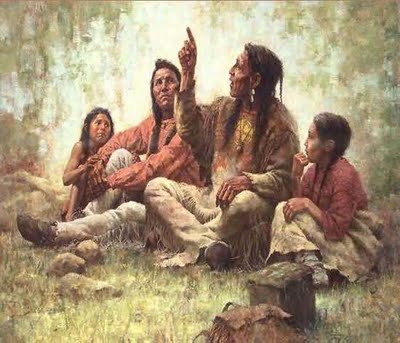
    But what was happening before the year 1440? From the dawn of human history until then, the vast majority of people received their literature and knowledge directly from another person, in the forms of myths, legends, tales, songs, epic poems, and folklore in our rich and now almost forgotten oral tradition. No writing systems. No intermediaries. The village medicine man, tribal elders, minstrels, bards, and other storytellers had the ears of anyone within the sound of their voice. From generation to generation in every culture, knowledge was passed along orally, with each generation adding new stories of their own. The Printing Revolution may have given birth to many vital movements, but it effectively put a halt to our rich traditions of person-to-person oral history, oral lore, oral law, and oral knowledge . . . until very recently.

    Just a few short years ago, what is perhaps the ultimate disintermediator came into being. Without the Internet, today’s Renaissance of Self-Publishing may never have gotten off the ground. After a six or seven century hiatus, the storytellers of our time finally have the ears of their listeners again. Well, almost.
  • Love of Countryside

    Love of Countryside

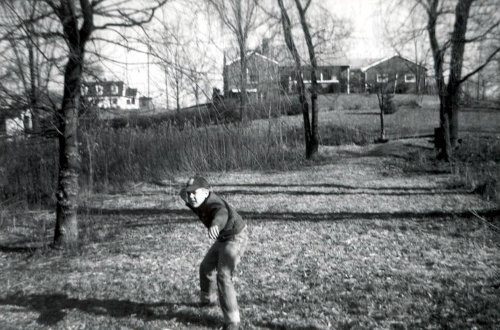
    I was raised in rural Ohio. It wasn’t a farm, but it was a big enough plot to have a large garden with room left over for pickup football games on crisp fall days. The maple trees added an element of suspense, and someone always went home a bloody hero. There was a little creek that trickled through the bottom of the property until a few days of hard rain drove it out of its banks and across the flood plain. As a boy, I couldn’t seem to go near that creek without getting wet, either jumping across it, falling off the random toppled tree that sometimes bridged it, or just sitting beside it. That five-acre plot has been in my family’s name for over 150 years now. Thankfully, it still is.

    Countryside in the Connemara District of Western Ireland

    My father’s family traces its roots back to Ireland, around the time of the Great Famine that forced so many people to leave their land in search of a place to make a new life. I had the good fortune to visit Ireland over a decade ago, and I fell in love with the people and the countryside there. It was easy to see why many of those Irish farmers chose Ohio as their new land. Whether I was gazing across green pastures in the Connemara district, hiking through the clints and grykes of the limestone pavement of the Burren, or exploring the ruins of Hore Abbey near The Rock of Cashel, the Irish countryside whispered to my heart. It told tales of clans and kings battling over the land—of farmers and shepherds and their families scratching out a life in that harsh, beautiful land.

    Ruins of Hore Abbey

    In these modern times, it seems so many people have never experienced having ties to any land. Growing up in cities of granite and asphalt, moving from temporary space to temporary space . . . never having a creek of their own to fall in or to daydream beside . . . how can they feel anchored—grounded—never having a place to put down roots? It disquiets me just to think about it.

    One of the central themes of An Irish Miracle is a family’s ties to their land . . . and the lengths they will go to when those ties are threatened.